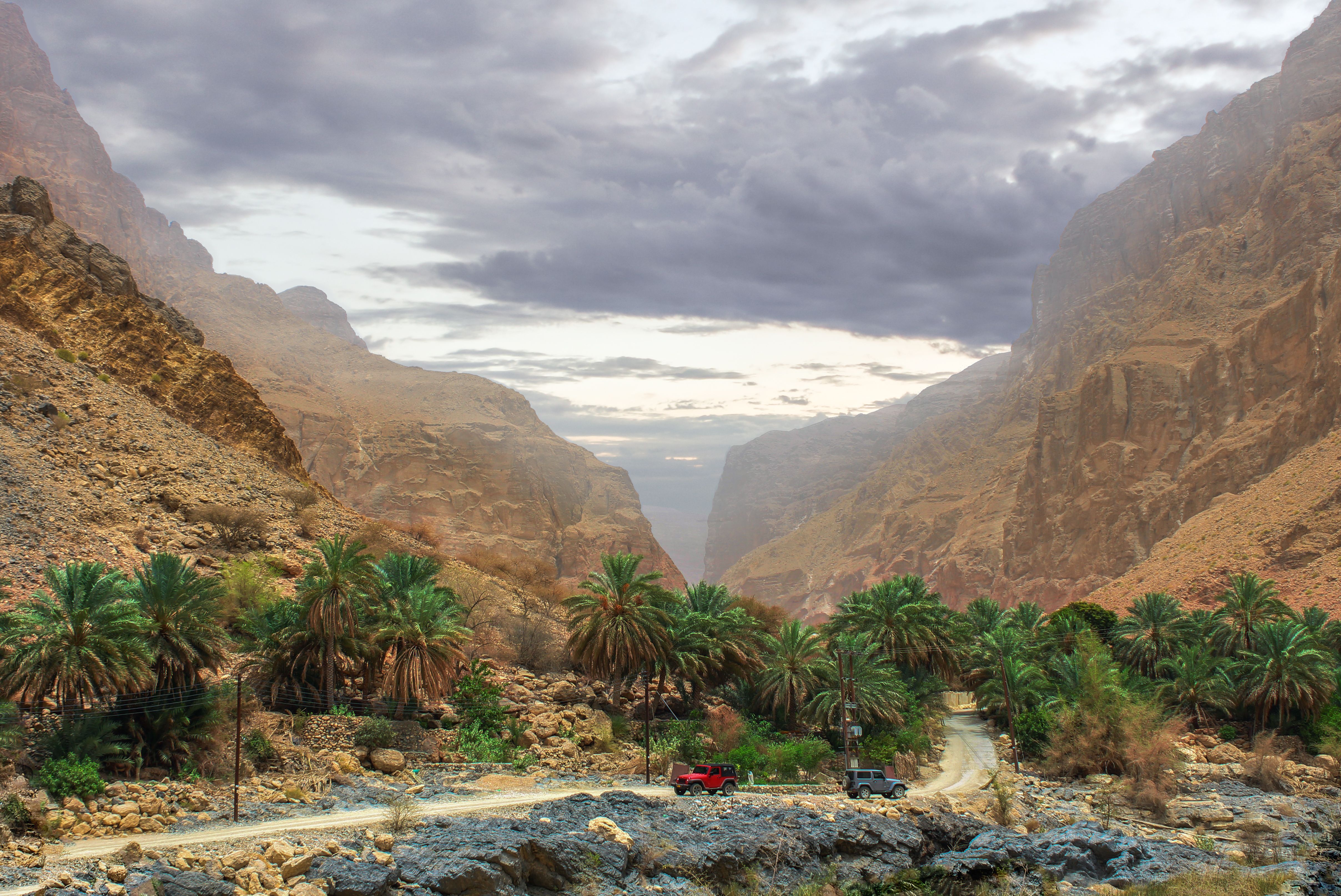
Wadi Shab is one of the places I recommend most often to first-time visitors who want to experience Oman's natural side.
It combines a scenic drive, a short boat crossing, hiking, swimming and a hidden waterfall inside the canyon. That variety is what makes the day memorable, but it also means you should come prepared.
Wadi Shab is not a place where you simply park beside a pool and swim.
You need to walk to reach the water, and reaching the final cave requires swimming.
Here is what I would want a guest to know before going.
Where is Wadi Shab?
Wadi Shab is on Oman's eastern coast between Muscat and Sur.
It is roughly 170 kilometers from Muscat International Airport, so it works well as a day trip from Muscat or as a stop while traveling toward Sur and the eastern coast.
The drive itself is part of the experience.
Once you leave Muscat, the landscape gradually opens into mountains, coastal villages and stretches of sea.
What actually happens when you visit Wadi Shab?
The visit starts near the entrance to the wadi.
You first take a short boat ride across the water to reach the beginning of the walking trail. From there, you hike deeper into the canyon toward the natural pools.
The route moves through rocky terrain with mountains rising on both sides.
Eventually, the dry trail gives way to water.
From that point, visitors who want to continue toward the hidden waterfall need to swim.
That combination of hiking and swimming is what makes Wadi Shab different from many easier-access wadis.
How difficult is the Wadi Shab hike?
I would describe it as a moderate outdoor activity rather than a casual walk.
You do not need to be an experienced hiker, but you should be comfortable:
- walking on uneven rocky ground
- being outside in the sun
- climbing over some natural terrain
- spending several hours active
- swimming if you want to reach the final part
The trail is not technically difficult for most reasonably active travelers, but heat makes a major difference.
A walk that feels comfortable in January can feel much harder in May.
That is why I always recommend starting early.
How long should you allow for Wadi Shab?
Do not treat Wadi Shab as a quick roadside stop.
I would allow several hours for the full experience.
That gives you time to cross by boat, walk into the canyon, swim, enjoy the pools and return without constantly watching the clock.
If Wadi Shab is your main activity for the day, there is no reason to rush it.
It pairs naturally with Bimmah Sinkhole and the coast, which is how we visit it on our Wadi Shab & Bimmah Sinkhole experience.
Do you have to swim at Wadi Shab?
No.
You can still enjoy the hike and scenery without swimming.
However, the final section and hidden waterfall require swimming through the pools and a narrow cave entrance. Oman’s official tourism guidance notes that basic swimming ability is needed to reach the hidden waterfall, and life jackets are recommended for additional safety.
If you are not a confident swimmer, do not feel pressured to continue.
The hike itself is still worthwhile.
What is the hidden waterfall?
The feature many visitors are trying to reach is a waterfall inside a cave near the end of the swimming section.
To reach it, you swim through the pools and then through a narrow opening in the rock.
It is one of those experiences that photographs do not explain very well because most of the journey happens before you get there.
The waterfall is the reward, but I think the canyon and pools along the way are just as much a part of the experience.
What should you wear to Wadi Shab?
Wear clothing that works for both hiking and swimming.
I recommend:
- lightweight athletic clothing
- quick-drying fabric
- modest swimwear underneath
- comfortable walking or water shoes
- sun protection
Do not wear clothes that become extremely heavy when wet.
You may also want to carry a dry shirt or change of clothes for the drive afterward.
Oman’s official tourism guidance specifically recommends hiking shoes or water-resistant sandals and advises against flip-flops because of the rough terrain.
What shoes are best for Wadi Shab?
This is one of the most important things to get right.
You want shoes with grip that you are comfortable wearing over rock.
Trail shoes, sturdy trainers or good water shoes are all reasonable options depending on your preference.
I would not recommend ordinary flip-flops.
They are uncomfortable on uneven terrain and can become slippery.
What should you bring?
Keep your bag relatively light.
I recommend bringing:
- plenty of water
- sunscreen
- hat
- sunglasses
- swimwear
- towel
- waterproof phone pouch
- dry change of clothes
- small snack
- waterproof bag for valuables
There are no shops inside the wadi, so bring what you need before you start walking.
Do not carry unnecessary valuables.
Anything you bring may need to travel with you while you swim.
Can you bring your phone?
Yes, but protect it properly.
A waterproof phone pouch is one of the easiest solutions if you want photographs from the swimming section.
Do not assume holding your phone above your head will be enough.
You will be moving through water, and slipping is always possible.
What is the best time of year to visit Wadi Shab?
For most visitors, the cooler months are more comfortable.
Official Oman tourism guidance lists roughly September through May as the recommended season.
Personally, I especially like October.
The air begins cooling after summer, but the water still feels pleasant for swimming.
From December through February, the weather is excellent for hiking, but some guests find the water surprisingly cool.
May through August can be very hot during the daytime.
The wadi is still beautiful, but the hike becomes much more physically demanding.
What time of day should you visit?
Earlier is better.
Starting early gives you:
- cooler temperatures
- more time inside the wadi
- less pressure to rush back
- better flexibility if the area becomes busy
It also makes it easier to add Bimmah Sinkhole or coastal stops later in the day.
If you are visiting during the warmer months, an early start becomes even more important.
Is Wadi Shab crowded?
It can be.
Wadi Shab is one of Oman's best-known natural attractions, especially during the cooler season, weekends and public holidays.
If you prefer a quieter experience, avoid arriving in the middle of the busiest part of the day.
Weekdays are generally a better choice when your itinerary allows it.
Is Wadi Shab good for children?
That depends on the child.
Older active children who are confident swimmers may enjoy it very much.
For younger children, the combination of heat, uneven terrain and swimming can be tiring.
Families should also remember that reaching the waterfall is not necessary.
You can turn around at any point.
If your family wants an easier swimming experience with much less hiking, Wadi Bani Khalid may be a better fit.
Is Wadi Shab safe?
Under normal conditions, Wadi Shab is visited by many travelers every year, but wadis should always be treated as natural environments rather than controlled swimming pools.
Weather matters.
Heavy rain in mountain areas can cause flash flooding even when the weather near the coast looks reasonable.
Never enter a wadi during dangerous weather conditions or ignore local warnings.
Also remember that wet rocks can be slippery.
Move carefully, especially when transitioning between walking and swimming.
Do you need a guide for Wadi Shab?
Not necessarily.
Independent travelers visit Wadi Shab regularly.
The route is well known, and the basic visit is straightforward if you are comfortable organizing transportation and managing the hike yourself.
A guide becomes useful if you want:
- transportation from Muscat
- someone handling timing and logistics
- local context during the drive
- help combining Wadi Shab with other stops
- reassurance if you are unfamiliar with wadis
Our Wadi Shab & Bimmah Sinkhole is designed as a full coastal day rather than only transportation to the trailhead.
Can you combine Wadi Shab with Bimmah Sinkhole?
Yes.
This is probably the most common combination.
Bimmah Sinkhole is along the coastal route, so it fits naturally into the same day.
I would still make Wadi Shab the main experience and treat Bimmah as the additional stop.
Trying to squeeze too many other places into the day can turn what should be an enjoyable outdoor experience into a schedule.
Can you stay overnight nearby?
Yes, and I actually like this option for travelers who have more time.
Instead of hiking Wadi Shab and immediately driving all the way back to Muscat, you can continue along the coast or camp nearby.
Our Canyons and Coast journey builds the wadi into a two-day experience with a coastal overnight.
It changes the pace completely.
Wadi Shab or Wadi Bani Khalid?
They are very different.
Choose Wadi Shab if you want:
- hiking
- swimming
- canyon scenery
- a more active day
- the hidden waterfall
Choose Wadi Bani Khalid if you want:
- easier access
- less walking
- relaxed swimming
- a natural combination with Sharqiya Sands
If you have enough time, I would visit both.
They do not feel repetitive.
Can you visit Wadi Shab on the way to Sur?
Yes.
It fits naturally into the Muscat-to-Sur route.
This is often better than driving from Muscat to Sur without stopping because the eastern coast has several places worth experiencing along the way.
Just remember that Wadi Shab can take several hours.
Do not schedule a long list of afternoon attractions in Sur immediately afterward.
My advice
The best way to enjoy Wadi Shab is to treat it as an experience rather than an attraction you need to complete.
Start early.
Wear the right shoes.
Bring enough water.
Do not rush the hike.
Swim only as far as you feel comfortable.
And leave enough time to stop occasionally and look around.
The hidden waterfall may be the feature everyone talks about, but the canyon itself is what makes the day worth remembering.