Oman is an easy country to enjoy once you understand how travel here works.
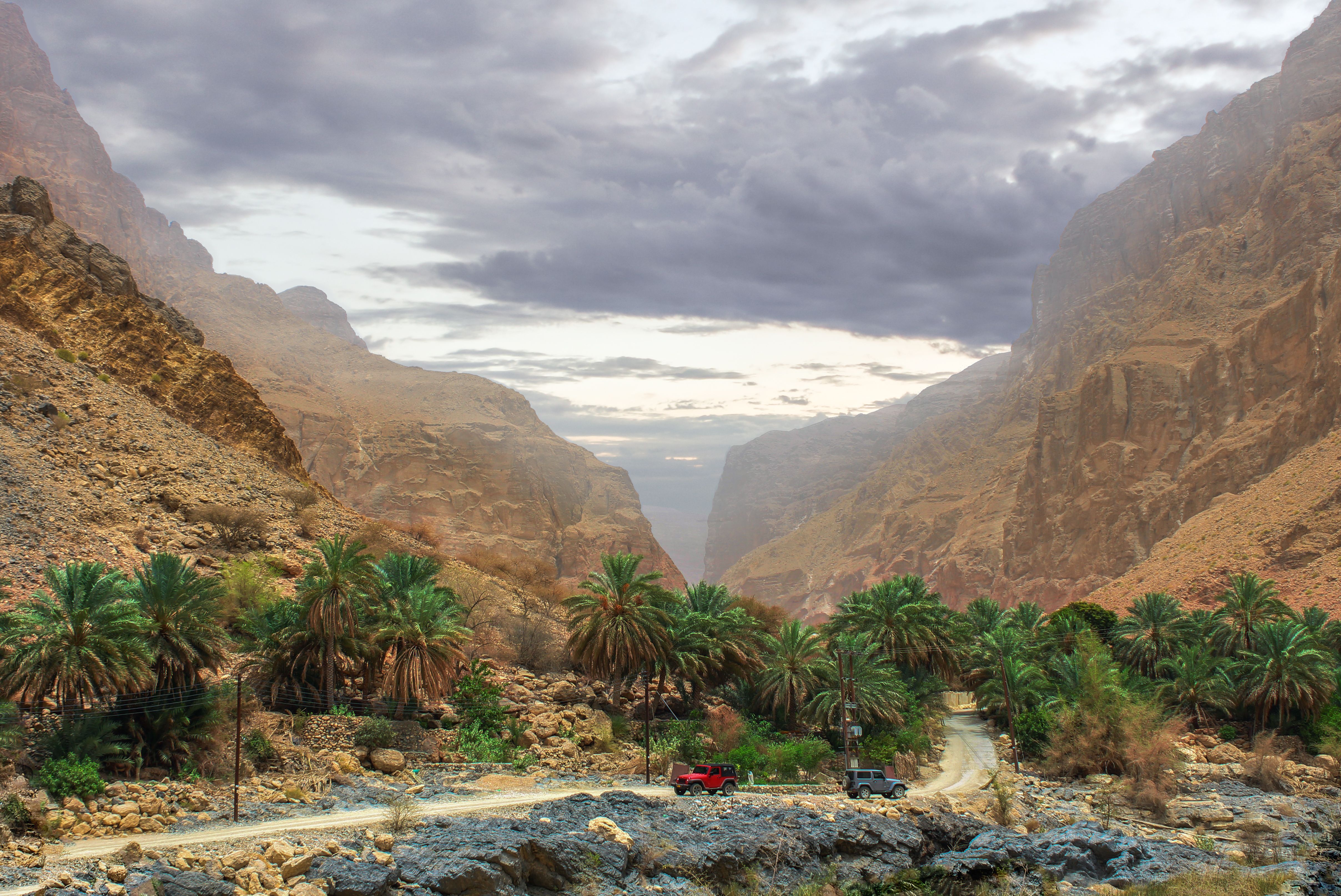
The distances are larger than many visitors expect. The landscapes can change dramatically in a single day. You may leave Muscat in warm weather, drive into cool mountains, swim in a wadi and sleep in the desert all within the same trip.
That variety is one of the best things about Oman.
It is also why a little planning makes such a difference.
If you are visiting for the first time, these are the things I would want you to know before you arrive.
1. Oman is bigger than it looks on the map
This is probably the first thing I would tell someone planning an itinerary.
Muscat, Nizwa, Jebel Akhdar, Jebel Shams, Sharqiya Sands, Sur and Wadi Shab are all in northern Oman, but they are not sitting beside each other.
Driving is part of the experience.
A route that looks simple on a map may still involve several hours on the road.
That is why I usually recommend at least five days for a first visit and seven if your schedule allows it.
If you are unsure how much time you need, our guide to How Many Days Do You Need in Oman? compares realistic four, five, seven and ten-day trips.
2. Do not try to see the whole country in one trip
Oman is not only Muscat, Nizwa and the desert.
There is also Dhofar in the south, Musandam in the north, Al Batinah, the central coast and many smaller mountain and coastal areas.
Trying to combine all of them into one short holiday usually creates more travel than enjoyment.
For a first trip of around one week, I would normally focus on northern Oman.
A route through Muscat, the interior, mountains, Sharqiya Sands and the eastern coast already gives you a lot of variety.
3. Check your visa requirements before booking
Visa requirements depend on your nationality, length of stay and purpose of travel.
Do not rely on an old blog post or a social media comment.
Check the current requirements through the official Royal Oman Police eVisa system before you travel.
Even if someone with the same passport entered without a problem last year, rules can change.
Also make sure your passport has enough validity remaining for your trip.
4. Oman is easiest to explore by road
If you want to see more than Muscat, you will probably spend time in a car.
Public transportation connects some major towns, but many of the places visitors come to Oman to experience are outside city centers.
Wadis, mountain villages, desert camps and remote beaches are much easier to reach with:
- a rental car
- a private driver
- a guide
- organized tours
Self-driving works well for independent travelers who are comfortable on the road.
You do not need a guide for every day.
5. You do not need a 4WD for the whole trip
This is a common misunderstanding.
A normal car is suitable for many major roads between Muscat, Nizwa, Sur and other towns.
There are specific places where a 4WD becomes important.
Jebel Akhdar requires a suitable 4WD for the mountain access checkpoint.
Desert driving also requires more than simply having a large vehicle.
If you have never driven in deep sand before, I would not recommend learning alone in Sharqiya Sands.
One practical option is renting a normal car for most of the trip and using a guide or local transfer when you actually need a 4WD.
Our Nizwa & Jebel Akhdar is one example where using a local 4WD removes that part of the planning.
6. Drive carefully even when the roads look easy
Oman's highways are generally good, and this can make long-distance driving feel very easy.
Still, pay attention.
You may encounter:
- changing speed limits
- speed cameras
- roundabouts
- animals near rural roads
- mountain descents
- sudden weather changes
- tired drivers after long travel days
Avoid planning a very long drive immediately after an overnight international flight.
It is better to spend the first day in Muscat and begin the road trip after resting.
7. Download offline maps
Mobile coverage is good in many populated areas, but it is still useful to have offline navigation.
Download your maps before heading into remote mountain, desert or coastal areas.
I also recommend saving your hotel location and important stops before leaving Wi-Fi.
Technology makes road trips easier, but do not make your entire plan dependent on having a perfect signal.
8. Oman is generally a conservative country
Visitors do not need to dress like Omanis.
You can wear normal travel clothing.
Modest dress is appreciated, particularly in:
- mosques
- villages
- souqs
- traditional towns
- government buildings
For most sightseeing, clothing covering the shoulders and knees is a simple guideline.
Women do not need to cover their hair during everyday travel.
A scarf is useful for mosque visits.
9. Mosque clothing rules are different
If you plan to visit Sultan Qaboos Grand Mosque, dress more carefully than you would for an ordinary sightseeing day.
Women should wear loose clothing covering the arms and legs and should cover their hair.
Men should also dress modestly and have their shoulders and knees covered.
Remember that this is an active place of worship.
Visit respectfully and follow current visitor guidance.
10. Bring more than summer clothes
Oman is associated with heat, but the country has very different elevations.
The temperature in Muscat is not the temperature you will necessarily experience in Jebel Akhdar or Jebel Shams.
During the cooler season, mountain evenings can feel genuinely cold.
Desert temperatures can also drop considerably after sunset.
Between November and March, I would carry at least one warm layer.
If you are spending the night in the mountains, bring more.
11. The best season depends on what you want to do
For most travelers exploring northern Oman, November through March offers comfortable weather.
That is also the busiest season.
Personally, I think October and April deserve more attention.
October is when the weather begins cooling after summer, and the wadi water can still feel very pleasant for swimming.
April is particularly interesting in Jebel Akhdar because of the rose harvest and traditional rose-water production.
The “best” month depends on whether you care most about hiking, swimming, desert nights, roses or avoiding crowds.
12. Summer requires a different itinerary
May through August can be extremely hot in northern Oman.
That does not mean you cannot travel, but you need to plan differently.
Outdoor activities should happen earlier in the day.
You need more water.
Long midday hikes become much less comfortable.
Mountain areas can provide some relief, but they are not air-conditioned outdoor spaces.
If you are visiting Oman specifically for hiking and desert travel, I would choose a cooler period.
13. Wadis are not controlled swimming pools
Oman's wadis are beautiful, but they are natural environments.
Conditions change.
Flash flooding can happen when rain falls in mountain areas, even if the weather where you are standing does not look dramatic.
Never ignore local warnings.
If there has been heavy rain, check conditions before entering a wadi.
For first-time visitors, Wadi Shab & Bimmah Sinkhole is one of the classic coastal experiences.
14. Wadi Shab requires more effort than many people expect
Wadi Shab is not a place where you step out of the car beside the main pool.
There is a short boat crossing followed by a hike.
If you want to reach the deeper pools and cave area, you will also need to swim.
Bring:
- good walking shoes
- water
- sun protection
- swimwear
- waterproof protection for your phone
- a dry change of clothes
Start early.
The experience is much better when you are not hiking in the hottest part of the afternoon.
15. Wadi Bani Khalid is easier
If you want a wadi experience with less hiking, Wadi Bani Khalid may suit you better.
The main pools are easier to access.
It also combines naturally with Sharqiya Sands, which is why Wadi Bani Khalid & Sharqiya Sands works well as a single day.
The two wadis are very different, so I would not consider one a substitute for the other if you have enough time for both.
16. Spend a night in the desert if you can
You can visit Sharqiya Sands during the day.
But I think the overnight experience is much better.
The desert changes as the sun goes down.
The temperature drops, the colors change and the atmosphere becomes quieter.
Then you experience the early morning before the heat returns.
That is why I prefer A Night in the Sharqiya Sands over treating the desert as a short photo stop.
17. Carry some cash
Cards are widely accepted in many hotels, restaurants, shops and larger businesses.
Still, carrying some Omani rials is useful.
You may need cash for:
- small shops
- local restaurants
- markets
- roadside stops
- minor purchases
- places where card machines are temporarily unavailable
You do not need to carry a large amount.
Just do not depend entirely on one card.
18. Local food can be very affordable
You do not need to eat inside hotels every day.
Oman has many inexpensive local restaurants serving Omani, Indian, Pakistani, Yemeni, Turkish and other regional food.
You can eat well without spending much.
Try different places.
Some of the best travel meals are not the expensive ones.
19. Friday feels different
Friday is the main weekly prayer day.
You may notice changes in opening hours and the rhythm of towns during Friday prayer.
If you want to see Nizwa's traditional livestock market, Friday morning is particularly important.
Plan that day carefully.
Do not assume every business or attraction follows exactly the same hours every day of the week.
20. Ramadan changes the daytime rhythm
If you travel during Ramadan, Oman is still open to visitors, but the rhythm of daily life changes.
Eating, drinking and smoking publicly during fasting hours should be avoided.
Some restaurants may operate differently during the day.
Evenings become much more active after the fast is broken.
Dress particularly respectfully and remember that Ramadan is not simply a travel inconvenience. It is an important religious month.
21. Ask before photographing people
Oman is extremely photogenic.
That does not mean every person you see wants to be part of your travel photos.
Ask before taking close photographs of people, especially women and families.
The same applies in markets and villages.
Landscape photography is easy.
People deserve a little more consideration.
22. Hospitality is an important part of the culture
Visitors are often surprised by how generous people can be.
You may be offered coffee, dates, food or help.
Accepting a small coffee or date can be a nice way to participate in that hospitality.
You do not need to feel uncomfortable if someone is simply being welcoming.
At the same time, normal personal boundaries still apply.
23. Coffee usually comes with dates
Omani coffee is often flavored with spices such as cardamom and served in small cups.
Dates commonly accompany it.
If someone continues pouring coffee and you have had enough, there are traditional gestures for signaling that you are finished.
Do not worry about knowing every custom before you arrive.
People understand that you are a visitor.
Watch what others do and ask when you are curious.
24. English is widely useful
Arabic is the official language, but visitors can manage very well using English in most tourism situations.
Hotel staff, guides, rental companies and many restaurant workers speak English.
Learning a few Arabic greetings is still appreciated.
Even something as simple as “as-salamu alaykum” can make an interaction warmer.
25. Do not schedule every minute
Oman is a country where some of the best moments happen between the planned stops.
A roadside coffee.
A village you did not expect to spend much time in.
A quiet beach.
An extra hour in the mountains because the weather is perfect.
If every day is planned down to fifteen-minute blocks, you lose some of that.
Build a route, but leave it room to breathe.
26. You do not need to book a guide for everything
Independent travel works very well in Oman.
But there are days when local knowledge adds more value.
A guide can be useful for:
- mountain routes
- desert access
- canyoning
- cultural context
- complicated day trips
- travelers who simply do not want to drive
You can mix guided days with independent days.
That is often the best balance.
27. Do not underestimate how much driving tires you out
A three-hour drive on a map does not always feel like just three hours.
You may stop for photographs.
You may visit a village along the way.
You may drive more slowly through mountains.
You may simply be tired after several consecutive travel days.
This is why I prefer itineraries that move logically through the country instead of using Muscat as a base every night.
28. Seven days is a very good first trip
If you have the choice, I would aim for around one week.
That gives you enough time for:
- Muscat
- Nizwa
- one mountain region
- Sharqiya Sands
- a desert overnight
- Sur
- Wadi Shab
- the eastern coast
If you have ten days, you can slow the journey down further and add more mountain or coastal time.
If you have five, you can still have an excellent trip. Just remove destinations rather than rushing.
29. Keep your final day flexible
I do not like putting a long, remote activity immediately before an international flight.
Use the last day for something close to Muscat.
That could be:
- Muttrah
- a relaxed city morning
- shopping
- a beach
- a boat trip
If flight timing allows, the Daymaniyat Islands Snorkeling Cruise is a very different way to finish a land-based road trip.
My advice
Do not arrive in Oman thinking you need to “complete” the country.
You will not.
And that is a good thing.
Pick a route that matches the time you actually have.
Dress respectfully.
Take the mountains and wadis seriously.
Leave space in the schedule.
Eat somewhere local.
Stay in the desert at least once.
And talk to people.
Oman's landscapes are usually what bring visitors here for the first time.
The slower moments are often what they remember afterward.