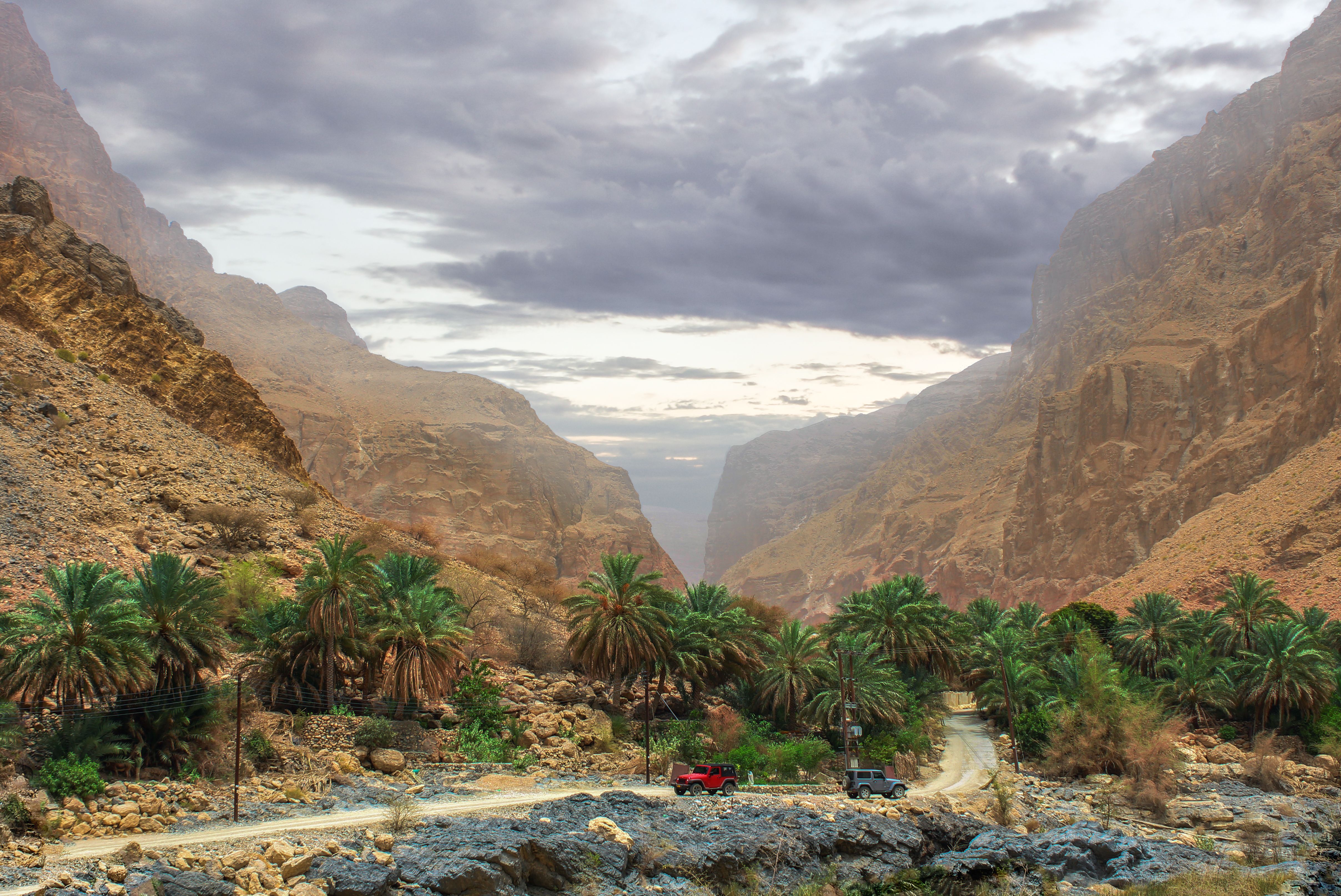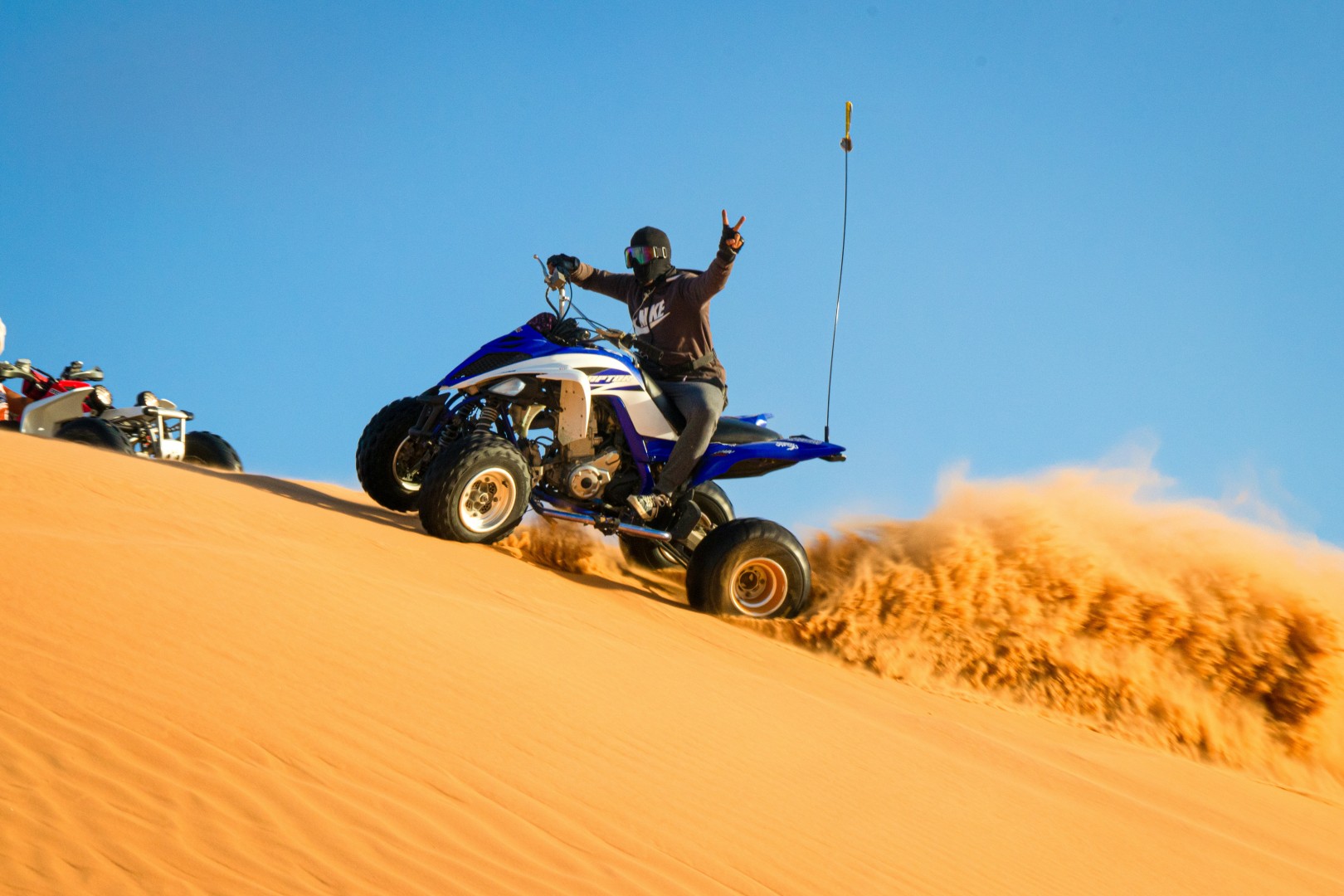
Sharqiya Sands is one of the places many travelers picture before they ever arrive in Oman.
Golden dunes.
Sunset.
A 4WD moving through the sand.
A night under a very clear sky.
All of that is part of the experience, but I think the desert is best when you do not treat it like a photo stop.
If you can, stay overnight.
The quiet after sunset and the early morning are what make Sharqiya Sands feel different from anywhere else on the route.
What is Sharqiya Sands?
Sharqiya Sands is a large desert region in eastern Oman.
You may also hear it called Wahiba Sands, which is the older name commonly used in travel guides.
The area is known for long dune systems, desert camps and Bedouin heritage.
It fits naturally into a northern Oman road trip because it sits between the interior and the eastern coast.
Where is Sharqiya Sands?
Sharqiya Sands is east of Nizwa and south of the coastal route toward Sur.
That location makes it easy to combine with:
- Wadi Bani Khalid
- Sur
- the eastern coast
- Nizwa
- Jebel Akhdar
A common route is:
Nizwa → Wadi Bani Khalid → Sharqiya Sands → Sur
That sequence works well because the scenery changes completely from mountains and villages to water and then desert.
Is Sharqiya Sands worth visiting?
Yes, especially if you have never spent a night in a desert before.
The desert is one of those places where the atmosphere changes quickly.
The middle of the afternoon can be hot and bright.
Then the sun begins to drop.
The dunes change color.
The air becomes cooler.
Everything becomes quieter.
That transition is the reason I recommend staying long enough to experience more than one part of the day.
Should you visit for the day or stay overnight?
Stay overnight if your itinerary allows it.
A day visit can still be enjoyable, especially if you are short on time.
But you miss the part I like most.
An overnight gives you:
- late afternoon light
- sunset
- cooler evening weather
- dinner at camp
- stars
- early morning dunes
- sunrise
- a slower departure
Our A Night in the Sharqiya Sands is designed around that slower experience rather than a quick drive in and out.
What are desert camps like?
They range from very simple to quite luxurious.
Some camps focus on traditional tents and a basic desert experience.
Others offer:
- private bathrooms
- air-conditioning
- permanent rooms
- restaurant service
- organized activities
- higher-end accommodation
The experience depends heavily on the camp you choose.
If you want something simple, you do not need to pay for a luxury property.
If the accommodation itself is part of the experience, then spending more can make sense.
Do you need a 4WD?
If you are driving into the dunes yourself, yes.
But this is important:
A 4WD does not automatically make desert driving safe.
Sand driving requires experience.
You need to understand:
- tire pressure
- momentum
- dune angles
- recovery
- traction
- navigation
If you have never driven on dunes before, I would not recommend learning alone.
Many camps arrange meeting points and transfers into the desert.
That is often the easiest option.
Can you drive to a desert camp in a normal car?
Sometimes you can reach a meeting point in a normal car, depending on the camp.
From there, the camp may transfer you into the dunes in a 4WD.
Always confirm directly with the camp before arriving.
Do not follow a map pin into the sand assuming the road will stay paved.
Is dune bashing part of the experience?
It can be.
Some camps and tours offer dune driving as an activity.
For some guests, it is exciting.
For others, it is not something they care about.
You do not have to do dune bashing to enjoy Sharqiya Sands.
I actually think sitting quietly on a dune around sunset can be just as memorable.
What is the best time to visit Sharqiya Sands?
October through April is the most comfortable period for most visitors.
Personally, I especially like October and April.
The nights are cooler, but not as cold as the middle of winter.
November through March is excellent too, especially if you prefer cooler daytime temperatures.
From May through September, the desert becomes extremely hot during the day.
You can still visit, but the experience changes.
How hot does it get in summer?
Very hot.
That is why I would avoid planning long outdoor desert activities in the middle of the day during summer.
If you are traveling then, arrive later in the afternoon and make the most of evening and early morning.
Heat changes everything.
A short walk on the dunes in January can feel completely different in June.
Does it get cold at night?
It can.
Winter desert nights may feel surprisingly cool.
That is especially noticeable after a warm afternoon.
From November through March, bring a jacket or warm layer.
If you are someone who gets cold easily, bring more than you think you need.
What should you wear in the desert?
During the day:
- lightweight breathable clothing
- loose long sleeves
- comfortable trousers
- hat
- sunglasses
- sunscreen
At night:
- light jacket
- warmer layer in winter
- closed shoes if you plan to walk farther
Loose clothing usually feels better than tight clothing in the sun.
What shoes are best?
For camp and short dune walks, sandals can be fine.
For longer walking, closed shoes are more comfortable.
Sand gets into everything anyway, so do not wear shoes you are worried about keeping perfectly clean.
What should you bring?
I recommend:
- sunscreen
- sunglasses
- hat
- water
- phone charger
- power bank
- light jacket
- comfortable shoes
- small overnight bag
- camera if you use one
If you are staying at a camp, check what they already provide before packing too much.
Is Sharqiya Sands good for families?
Yes.
Children often enjoy the dunes because there is space to explore and play.
Families should still take heat seriously.
Keep children hydrated.
Avoid long walks in the hottest hours.
And supervise them around steep dune edges.
The desert looks soft, but the slopes can still be tiring to climb.
Is Sharqiya Sands good for solo travelers?
Yes, especially if staying at a camp.
A camp gives you structure and people around you.
That can feel much easier than trying to navigate the dunes alone.
If you are solo, I would be even more cautious about self-driving into the desert without experience.
Is Sharqiya Sands safe?
Generally, yes, if you use appropriate transport and respect the environment.
The main risks are practical:
- heat
- dehydration
- getting stuck
- getting lost
- driving too aggressively
- going too far without another vehicle
- poor preparation
The desert is beautiful, but it is still a harsh environment.
Can you camp independently?
Yes, but only if you know what you are doing.
Wild camping is popular in Oman, but desert camping requires more preparation than parking beside a beach.
You need to think about:
- vehicle access
- navigation
- water
- weather
- recovery equipment
- where you are setting up
- how far you are from help
If it is your first desert experience, an organized camp is easier.
What is sunset like?
This is one of the best parts.
The dunes become warmer in color as the sun gets lower.
Shadows become longer.
The temperature starts dropping.
It is worth getting to a dune before the sun is almost gone.
Do not wait until the last five minutes.
Give yourself time.
What about sunrise?
Much quieter.
Many guests focus only on sunset, but early morning can be even more peaceful.
The air is cooler.
The dunes are empty.
The light is softer.
If you stayed overnight, wake up early at least once.
You can always sleep later.
Can you see stars?
Usually, yes, especially farther from camp lights.
Cloud cover and moon phase make a difference.
A full moon can brighten the desert dramatically.
A darker night gives you stronger stars.
Either can be beautiful.
Should you combine Sharqiya Sands with Wadi Bani Khalid?
Yes.
This is probably the most natural pairing.
Wadi Bani Khalid is easy to reach, and the route toward the desert makes sense.
You can swim during the day and reach the dunes later in the afternoon.
Our Wadi Bani Khalid & Sharqiya Sands combines both in one day.
If you want a slower version, Oasis to Desert gives the two landscapes more time.
Should you combine Sharqiya Sands with Sur?
Yes.
After the desert, continuing toward Sur is much more logical than returning to Muscat.
A good sequence is:
Wadi Bani Khalid → Sharqiya Sands → Sur → Wadi Shab → Muscat
This is one of the cleanest routes for a first Oman road trip.
Can you visit Sharqiya Sands from Muscat in one day?
Yes.
But it is a long day if you are driving there and back.
You will enjoy it much more if you stay overnight or continue onward toward Sur.
A same-day return is possible when time is limited, but it would not be my first choice.
Is Sharqiya Sands better than the White Dunes of Khaluf?
They are very different.
Sharqiya Sands is easier to include in a first-time Oman route and has more established camp options.
Khaluf feels more remote and gives you the unusual combination of pale dunes and coast.
For a first trip, I would usually recommend Sharqiya Sands.
For a second trip or something more remote, the White Dunes of Khaluf are worth considering.
How many nights should you stay?
One night is enough for most first-time visitors.
Two nights make sense if you want to slow down, spend more time around camp or experience the desert without immediately moving on.
For a one-week Oman itinerary, one desert night is usually the right balance.
Is the desert good for photography?
Yes.
Early morning and late afternoon are best.
The shadows give the dunes more shape.
The middle of the day can make everything look flatter and harsher.
Simple compositions work well.
You do not need dramatic activity in every photo.
Sometimes one dune and a long shadow are enough.
What should you avoid?
I would avoid:
- driving into deep sand alone without experience
- arriving after dark if you do not know the route
- walking far from camp without telling anyone
- underestimating the heat
- carrying too little water
- treating dunes like a racetrack
- leaving rubbish behind
The desert should look the same after you leave.
My advice
Do not rush Sharqiya Sands.
The desert is not interesting because there are twenty things to do.
It is interesting because there is space.
Space to walk.
Space to watch the light change.
Space to hear almost nothing.
Stay overnight if you can.
Watch sunset.
Wake up for sunrise.
And once you reach the top of a dune, sit there for a while before you reach for your phone.
That is usually when the desert begins to feel like more than another stop on the itinerary.