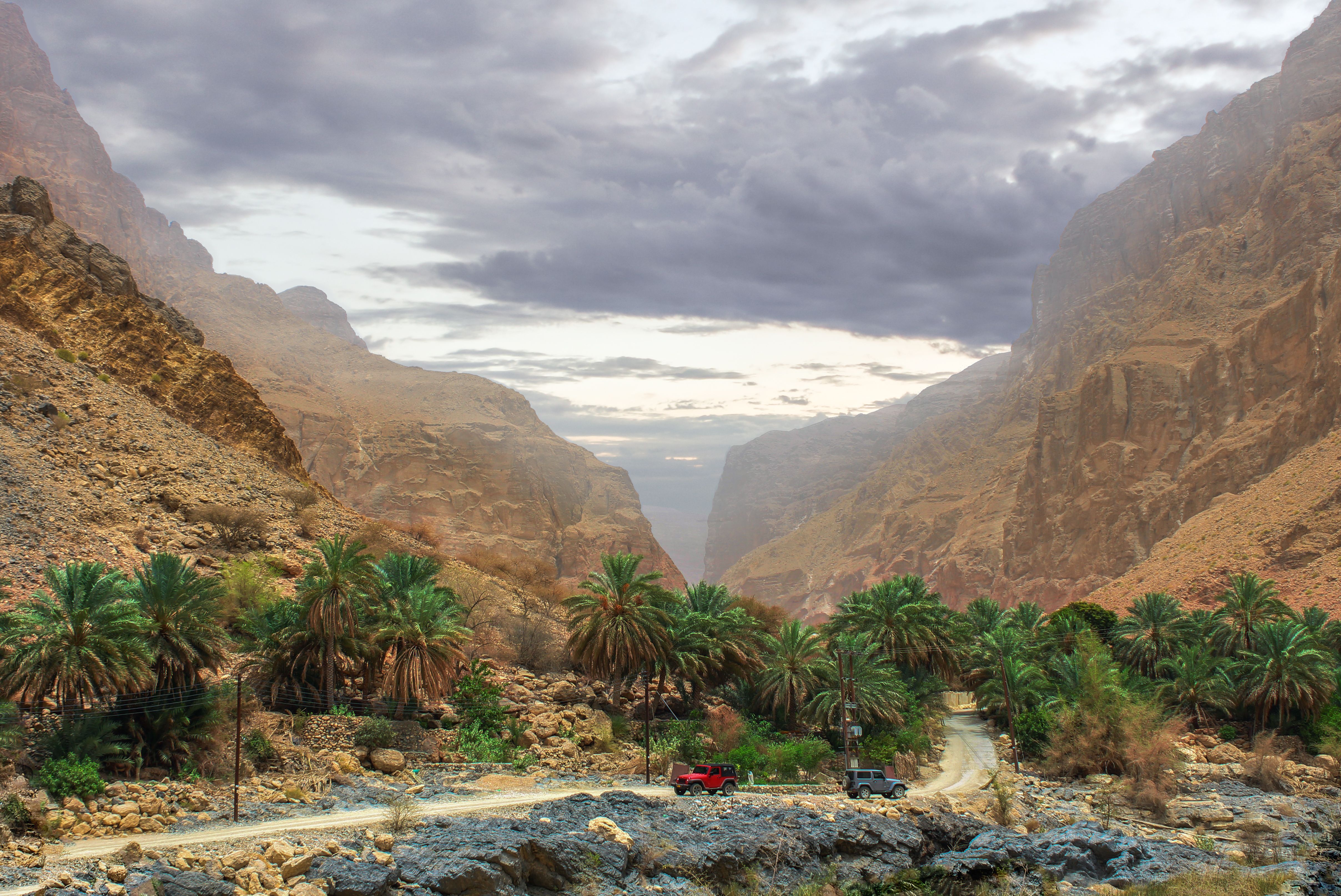
If you only know northern Oman, Khareef can be difficult to imagine.
While Muscat and much of the country are experiencing the heat of summer, southern Oman changes completely.
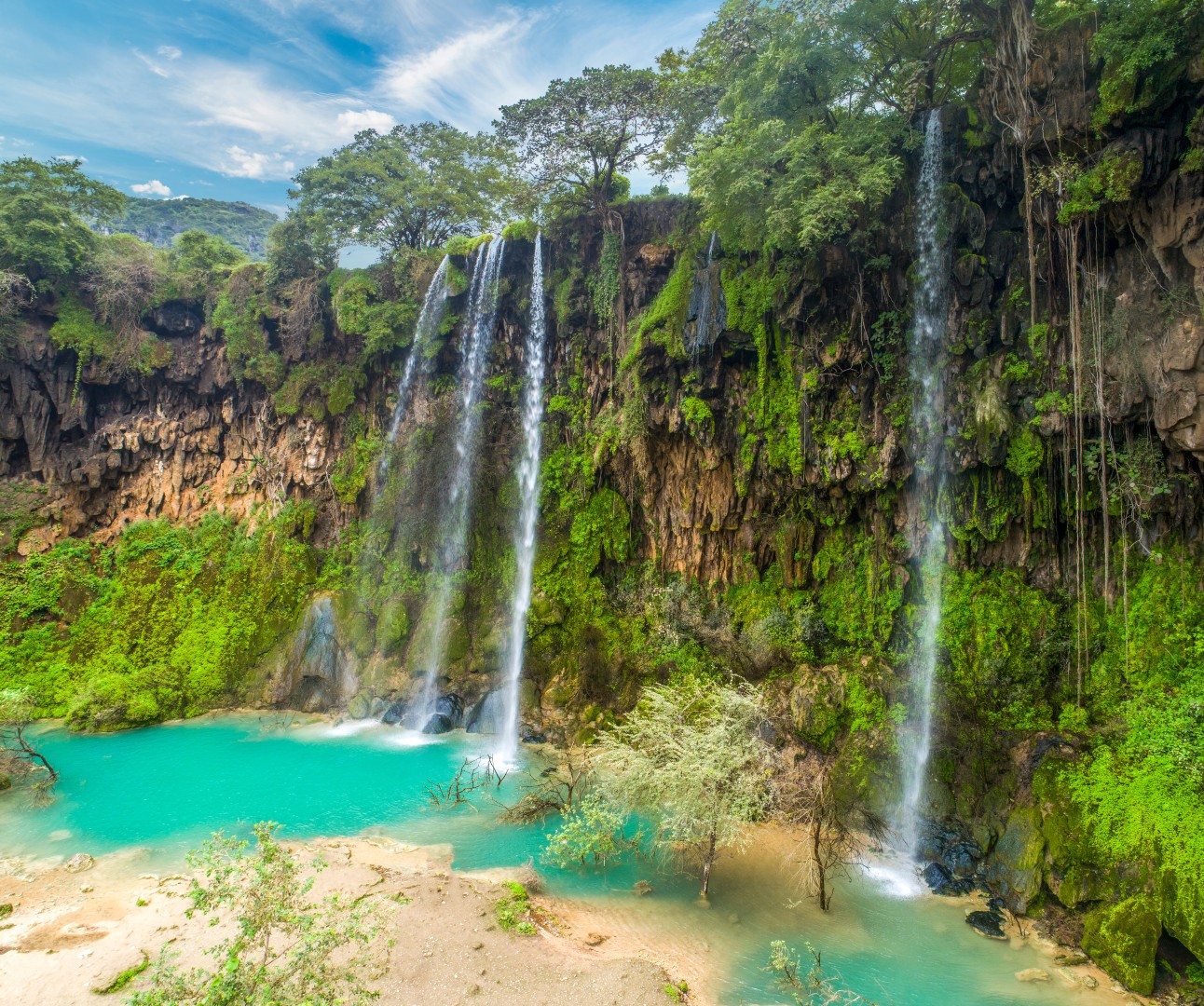
Clouds settle over the mountains around Salalah. Mist hangs across the hills. Water begins flowing through wadis. The landscape turns green.
It does not look like the Oman many first-time visitors expect.
That is exactly why Khareef has become such a special season for Dhofar.
What is Khareef?
Khareef is the seasonal monsoon that affects Dhofar in southern Oman.
It generally runs from around mid-June through September. During this period, moisture from the Arabian Sea brings cloud, mist and light rain to the mountains and coastal plain around Salalah. Oman’s official tourism guidance describes Khareef as the period when Dhofar’s plains and mountains become green and the region experiences cooler conditions, flowing wadis and seasonal waterfalls.
The Arabic word “khareef” can refer to autumn, but in Salalah it has become closely associated with this specific green season.
When is the best time to visit Salalah for Khareef?
The official season generally runs from June through September.
If your main reason for visiting is the green landscape, I would usually aim for July or August.
By then, the mountains have had more time to become green and the seasonal water features are more established.
June can be beautiful, but the transformation may still be developing.
September can also be very good, especially for travelers who want the scenery with slightly fewer peak-season crowds.
What does the weather actually feel like?
Do not imagine constant heavy tropical rain.
Khareef is often more about:
- low cloud
- mist
- drizzle
- light rain
- cooler air
- damp conditions
The mountains may disappear into cloud for part of the day.
Roads can be wet.
You may need windshield wipers even when the rain feels very light.
It is a completely different atmosphere from a dry northern Oman summer.
Is Salalah cold during Khareef?
Not cold in the way Europeans or North Americans might use the word.
But it can feel surprisingly cool compared with Muscat or the Gulf summer.
Bring a light jacket or sweater.
That may sound strange when packing for Oman in July or August, but you may genuinely want it in the hills, especially with wind and drizzle.
Why does Dhofar turn green?
Dhofar has a unique climate because of its position along the Arabian Sea and the mountains surrounding Salalah.
During Khareef, moist air is pushed toward the mountains.
Cloud and drizzle settle across the slopes, allowing grasses and other vegetation to flourish.
The result is a narrow seasonal green belt that looks very different from the dry landscapes farther north.
That contrast is part of what makes the region so interesting.
What is Salalah like during Khareef?
Busy.
This is one thing travelers should know before arriving.
Khareef is extremely popular with visitors from Oman and across the Gulf.
Families travel south specifically to escape the summer heat.
That means:
- hotels can fill
- accommodation prices can rise
- popular viewpoints become crowded
- roads can be busier
- restaurants and attractions may have more visitors
If you want solitude, peak Khareef is probably not the quietest time to visit Salalah.
If you enjoy a festive atmosphere and want to see the region at its greenest, it can be excellent.
What should you see during Khareef?
The main attraction is not one individual landmark.
It is the landscape itself.
The best days usually involve driving through the mountains, stopping at viewpoints, visiting wadis and letting the weather shape the experience.
A few places are especially popular.
Wadi Darbat
Wadi Darbat is one of the best-known places to visit during Khareef.
The valley becomes much greener during the season, and water flows through the landscape.
You may see cattle or camels grazing nearby, which makes the scenery feel almost pastoral.
Because it is famous, it can also become very busy.
Go earlier in the day if you can.
The mountains around Salalah
Do not spend the entire trip inside Salalah city.
The surrounding mountains are where Khareef becomes most obvious.
Drive into the hills and the scenery changes quickly.
You may move through fog, green slopes and viewpoints overlooking the plains.
Sometimes visibility is perfect.
Sometimes the mountain disappears completely into cloud.
That unpredictability is part of the season.
Mughsail Beach
West of Salalah, Mughsail gives you a completely different landscape.
The beach is backed by dramatic cliffs, and the road west is one of the most scenic drives in Dhofar.
During rough sea conditions, this part of the coast can look very powerful.
Do not assume the sea is safe for swimming simply because the beach is beautiful.
Pay attention to conditions.
Ayn Razat and the springs
Dhofar is known for natural springs, and these areas become especially attractive during the greener months.
They are easy places to combine with a scenic drive around Salalah.
Some can become crowded during peak season, so timing matters.
Frankincense country
Khareef should not make you forget why Dhofar has been historically important for thousands of years.
This is the land of frankincense.
Boswellia sacra trees grow naturally in this region, and the frankincense trade helped connect southern Arabia with Africa, India and the Mediterranean world.
Oman’s official tourism site highlights Dhofar’s long history as the “Land of Frankincense” and the archaeological sites connected with that trade.
Al Baleed and the Museum of the Frankincense Land
If you want historical context, this is one of the places I would include.
Al Baleed was an important port connected to the frankincense trade.
The museum helps explain why Dhofar mattered internationally long before modern tourism.
It is useful to visit before or after exploring the rest of the region because it gives the landscape historical meaning.
Sumhuram and Khor Rori
Sumhuram is another important archaeological site associated with the ancient frankincense trade.
The ruins overlook Khor Rori and give you a sense of how maritime trade shaped this part of Oman.
Dhofar is not only about green mountains.
Its history is just as important.
Should you visit Salalah outside Khareef?
Absolutely.
This is one of the biggest misconceptions about Salalah.
Khareef is special, but it is not the only time worth visiting.
From roughly October through May, the weather becomes drier and sunnier. Oman’s tourism authority specifically notes that these months are well suited to outdoor activities and beach travel in Salalah.
The landscape is less dramatically green, but the beaches can look much better under clear skies.
You also have fewer crowds.
Khareef or winter: which is better?
Choose Khareef if you want:
- green mountains
- mist
- seasonal waterfalls
- cooler Gulf summer weather
- the distinctive monsoon atmosphere
Choose winter if you want:
- sunshine
- clearer mountain views
- beaches
- outdoor exploration
- fewer Khareef crowds
Neither is automatically better.
They are almost two different versions of Dhofar.
Are the beaches good during Khareef?
They are beautiful, but Khareef is not necessarily the best beach-swimming season.
The sea can be rougher, cloudier and more dramatic during the monsoon.
If your dream is calm turquoise water and a classic beach holiday, the drier winter season may suit you better.
During Khareef, I would focus more on landscapes, mountains and seasonal scenery.
What should you wear during Khareef?
Bring layers.
I recommend:
- lightweight everyday clothing
- light rain jacket
- sweater or thin jacket
- comfortable shoes
- footwear that can handle wet ground
- umbrella if you like using one
- sun protection
You may still encounter sun and warmth.
The weather can change throughout the day.
Do you need a 4WD?
Not for every attraction.
Many popular Khareef locations can be reached on paved roads.
A 4WD becomes more useful for remote routes, rough tracks and certain mountain or desert areas.
Do not assume green scenery means every road is easy.
Rain can affect road conditions.
If a route looks questionable, check before continuing.
Is driving difficult during Khareef?
Most main roads are straightforward, but the weather adds a few things to think about.
Fog can reduce visibility in the mountains.
Road surfaces may be wet.
Popular areas can become congested.
Drive more slowly than you normally would if visibility is poor.
Do not rush simply because navigation says you should arrive at a certain time.
Are flash floods a concern?
As anywhere in Oman, wadis deserve respect during wet weather.
Khareef usually brings lighter rain rather than dramatic thunderstorms, but conditions can still change.
Do not drive through floodwater.
Do not ignore road closures.
Do not park where water can rise.
Local conditions matter more than a fixed itinerary.
How many days do you need in Salalah?
For Khareef, I would recommend at least three full days.
Four or five is better.
That gives you enough time to experience:
- eastern Dhofar
- western Dhofar
- mountain scenery
- historical sites
- the city
- frankincense heritage
The weather can also affect visibility, so extra time gives you flexibility.
A simple 3-day Khareef itinerary
Day 1: Salalah and cultural sites
Explore the city, Al Baleed and the Museum of the Frankincense Land.
Visit a souq and spend the evening enjoying the city.
Day 2: East Dhofar
Visit Wadi Darbat, Sumhuram and the surrounding mountain areas.
Leave time for scenic stops rather than planning every minute.
Day 3: West Dhofar
Drive toward Mughsail and the mountains west of Salalah.
This is one of the most scenic parts of the region.
If visibility is good, take your time at the viewpoints.
Should you combine Salalah with Muscat?
You can.
But remember how far apart they are.
For a short trip, I would not try to drive from Muscat to Salalah simply to say you saw both.
Flying between them makes more sense if you are combining regions.
If you have only seven days in Oman, I would usually choose either a northern Oman road trip or a Dhofar-focused trip rather than dividing your time too much.
Is Khareef good for families?
Very much so.
This is one reason the season is so popular regionally.
The cooler weather and green landscapes make outdoor days more comfortable than the extreme summer heat elsewhere in the Gulf.
Just be prepared for crowds at the most popular locations.
Is Khareef good for photographers?
Yes, especially because it looks so different from the Oman most people recognize.
Fog moving across mountains, green slopes, camels grazing in mist and seasonal waterfalls all create unusual scenes.
The challenge is visibility.
Sometimes you arrive at a viewpoint and see almost nothing.
Wait.
Conditions can change surprisingly quickly.
Is Salalah worth visiting if you have already seen northern Oman?
Yes.
Very much so.
Dhofar feels distinct culturally, geographically and climatically.
It does not feel like simply visiting another Omani city.
The vegetation is different.
The architecture feels different.
The history of frankincense is deeply connected to the region.
The coastline is different.
Even the food has regional influences you may not encounter in exactly the same way farther north.
My advice
Do not visit Salalah during Khareef expecting constant sunshine.
The mist is the point.
The cloud is the point.
The drizzle is part of what creates the green landscape you came to see.
Also, do not judge Dhofar only by Khareef.
Come during the green season and you see one side of southern Oman.
Come during winter and you see another.
Both are worth experiencing.
Khareef is special because for a few months each year, the south of Oman becomes something completely unexpected.
And sometimes that surprise is the best reason to go.