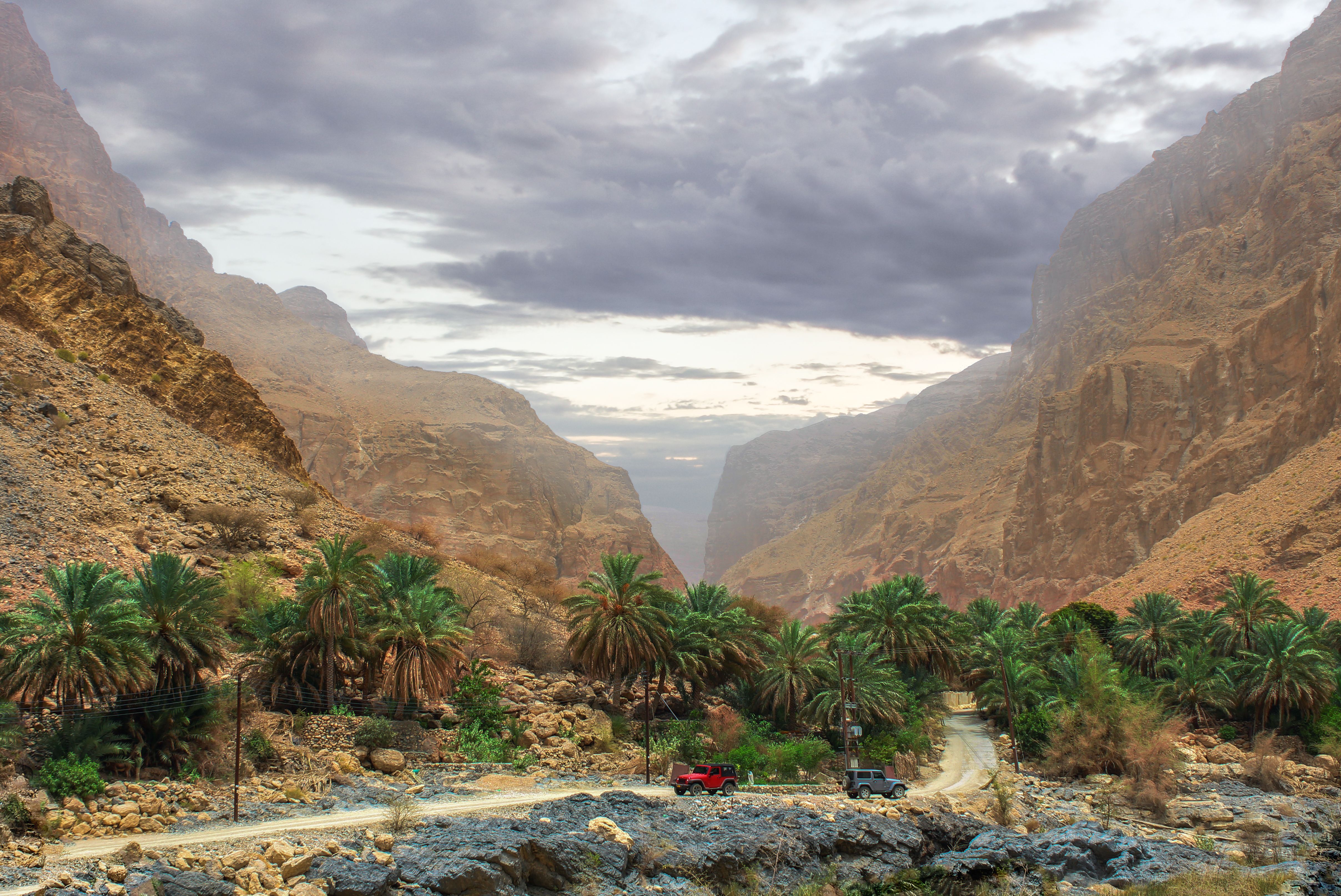
Winter is the season most people imagine when they plan a first trip to northern Oman.
The days are comfortable, hiking becomes much easier, desert nights feel cooler and you can spend far more time outside than you would in the height of summer.
But winter in Oman does not mean one temperature everywhere.
Muscat, the mountains, the desert and Salalah can all feel very different on the same trip.
When is winter in Oman?
For travel planning, think roughly from November through early March.
This is the milder, drier period in much of northern Oman and the busiest season for outdoor travel.
December, January and February are the months when visitors are most likely to be surprised by how cool the mountains and desert can feel.
What is Muscat like in winter?
Usually very comfortable.
Days are often warm enough for light clothing, while evenings can feel pleasantly cool.
This is one of the best periods for walking around Muttrah, visiting the Grand Mosque, exploring Old Muscat and spending time along the coast without planning your entire day around the heat.
Do you need a jacket?
Yes, bring one.
You may not need it every day in Muscat, but you will appreciate it in the mountains, desert evenings, on boats and sometimes in heavily air-conditioned indoor spaces.
A light jacket or warm layer takes very little suitcase space and solves a lot of problems.
How cold are the mountains?
Much cooler than the coast.
Jebel Akhdar and Jebel Shams sit at high elevation, and winter mornings and evenings can feel genuinely cold.
If you are staying overnight, pack more than a thin summer layer.
The temperature difference is one of the things first-time visitors underestimate most.
Jebel Akhdar in winter
Winter is excellent for village walking and viewpoints.
The air is cooler and the terraces are comfortable to explore on foot.
If your trip is specifically about rose season, however, spring is the better period. Winter gives you the mountain without the rose harvest.
Our Jebel Akhdar: Villages & Mountain Views is a good way to experience the plateau without rushing the walking sections.
Jebel Shams in winter
This is one of the best seasons for the Balcony Walk.
The cooler weather makes hiking far more comfortable than in hotter months.
Start with layers you can remove as you warm up.
Even on a sunny day, wind can make exposed viewpoints feel much colder than the temperature suggests.
What is the desert like in winter?
Excellent during the day and cool after sunset.
Sharqiya Sands is much more comfortable for walking on dunes, watching sunset and spending time outside camp during winter.
But once the sun disappears, the temperature can drop quickly.
Bring a warm layer for an overnight.
A Night in the Sharqiya Sands is especially enjoyable in this season because you can actually sit outside after dark without the intense summer heat.
Can you swim in winter?
Yes, but the water may feel cool.
Wadi Shab and Wadi Bani Khalid are still beautiful in winter. The hiking conditions are often excellent, but some visitors find the pools colder than expected.
If swimming is a major priority and you dislike cool water, October can be a very good compromise because the air is improving while the water still carries more summer warmth.
What about the sea?
Boat trips and snorkeling are still possible, and winter can be a comfortable time to be on the water.
Bring a dry layer for the ride back, especially if it is windy.
Our Daymaniyat Islands Snorkeling Cruise works well as a change of pace in a winter road-trip itinerary.
Does it rain in winter?
Rain is not constant, but it can happen.
When it does, take wadi warnings seriously.
Flash flooding is a natural risk in Oman, and conditions upstream matter just as much as the sky directly above you.
A flexible itinerary is always better than forcing a wadi visit because it was scheduled for that day.
What should women pack?
- lightweight trousers and long skirts
- breathable tops
- scarf for mosque visits
- comfortable walking shoes
- swimwear
- light jacket
- warmer layer for mountain nights
- sun protection
You do not need an entirely separate winter wardrobe. Layers are the key.
What should men pack?
- lightweight trousers
- T-shirts or shirts
- walking shoes
- swim shorts
- light jacket
- warmer layer for mountains or desert
- hat and sunscreen
Do you still need sunscreen?
Absolutely.
Cooler air can make people forget how strong the sun still is.
That is especially true at elevation, in the desert and on the water.
Is winter crowded?
It is the busiest travel period in northern Oman.
Hotels, desert camps and mountain properties can fill more quickly, especially around holidays.
Popular places such as Wadi Shab and Nizwa are also busier on weekends.
If you know where you want to stay, book earlier than you would in summer.
Is December a good month?
Yes.
December gives you comfortable daytime temperatures and strong outdoor conditions.
Expect cooler nights, especially inland and at elevation.
What about January?
January is one of the coolest periods of the year and very good for hiking, sightseeing and long road-trip days.
If you are someone who gets cold easily, take mountain layers seriously.
What about February?
February is still excellent and begins moving toward spring.
It can be a particularly good choice if you want winter comfort but prefer traveling after the year-end holiday period.
Where should you go in winter?
For a first trip, almost the entire classic northern Oman route works well:
- Muscat
- Nizwa
- Jebel Akhdar
- Jebel Shams
- Sharqiya Sands
- Wadi Bani Khalid
- Sur
- Wadi Shab
- the eastern coast
- Daymaniyat Islands
This is the season when you have the fewest heat-related compromises.
My advice
Pack for several climates, not one.
You can be warm in Muscat at lunchtime and genuinely cold in the mountains that evening.
Bring layers, keep a jacket in the car and do not assume “Oman in winter” means you will never feel cold.
The reward is that this is one of the easiest times of year to spend full days outside and experience the country slowly.