If you are researching a trip to Oman right now, there is a good chance you have seen headlines about the region and wondered whether you should still come.
I understand the concern.
But I also think there is a difference between reading about the Middle East from far away and actually being here.
I live in Oman, I move around Muscat on my own, I travel around the country, and I do so as a single woman.
In my day-to-day experience, Oman feels calm.
Life is continuing normally.
People are going to work. Families are out at restaurants and malls. Tourists are visiting the souqs, mountains and wadis. Guides are running tours. Boats are going out. Hotels are operating.
There is not a feeling here of people walking around afraid or waiting for something to happen.
That is the part that can be difficult to understand from a headline.
What does Oman actually feel like right now?
Normal.
That is probably the simplest way I can describe it.
When you are here, you are not constantly being reminded of regional politics.
You are much more likely to be thinking about whether you want coffee, where you are going for dinner, what the weather will be like in Jebel Akhdar or whether you should go to the beach.
Muscat continues to feel quiet and relaxed.
People are out in the evenings.
Families sit together in cafés.
You see tourists walking around Muttrah, visiting the Grand Mosque and heading out on road trips.
Daily life has not stopped.
That does not mean nothing could ever change. Of course it could.
The wider region is experiencing real tensions, and it would be irresponsible to pretend otherwise.
But regional tension and daily life inside Oman are not necessarily the same thing.
My experience as a woman in Oman
One of the reasons I feel comfortable writing this personally is that I am here as a woman living independently.
I do normal things alone all the time.
I go to the store.
I take taxis.
I walk around.
I go to cafés.
I handle business.
I travel around Muscat and beyond.
I do not spend my day feeling on guard.
That has been one of the things I appreciate most about Oman.
There is a calmness to everyday life here.
That does not mean I abandon common sense.
I still pay attention to where I am going. I would not deliberately put myself in an isolated situation late at night. I would not go hiking somewhere remote without thinking about the route. I would not ignore weather warnings or drive carelessly.
But those are normal precautions.
They are not precautions I take because I feel threatened by being in Oman.
Does being a solo woman feel uncomfortable?
For me, no.
If anything, one of the things that stands out is how easy it is to simply go about your day.
I do not feel that I have to constantly explain why I am alone.
I do not feel uncomfortable going into a restaurant or café by myself.
I do not feel unusual being out handling everyday life independently.
People may be curious, friendly or helpful, but I have not experienced Oman as a place where being a woman alone automatically makes daily life difficult.
For women who are considering traveling solo, I think that distinction matters.
You can be cautious without being afraid.
What about the news?
This is where things become complicated.
If you look only at travel advisories, you may see language that sounds alarming.
For example, the U.S. State Department currently lists Oman at Level 3, “Reconsider Travel,” because of risks connected to regional armed conflict and terrorism. It also specifically advises against travel near the Yemen border.
Those advisories matter.
Travelers should read them.
You should also check your own government's latest guidance before you fly because regional conditions can change quickly.
But an advisory is not always a description of what daily life feels like on the ground.
That is an important distinction.
I would never tell someone to ignore an official advisory.
I would tell them to read it, understand what it is warning about, look at where they are actually traveling and then make an informed decision.
Is Oman affected by regional tensions?
Oman is part of the region, so it would be inaccurate to say that regional developments have absolutely nothing to do with the country.
Airspace, airlines and travel logistics can potentially be affected when tensions escalate elsewhere.
That is one reason I would always check your flight status before traveling.
But that is different from saying that normal life inside Oman has been disrupted.
From my experience here, it has not.
There is a big difference between the possibility of regional disruption and feeling unsafe walking through Muscat.
Those are not the same thing.
Oman has a different atmosphere from what many people expect
People who have never been here sometimes imagine something much more tense.
Then they arrive and are surprised by how peaceful it feels.
Muscat is not a loud, frantic city.
You do not have huge crowds everywhere.
Even traffic, depending on the time of day, often feels manageable compared with other capitals.
Once you leave Muscat, things become even quieter.
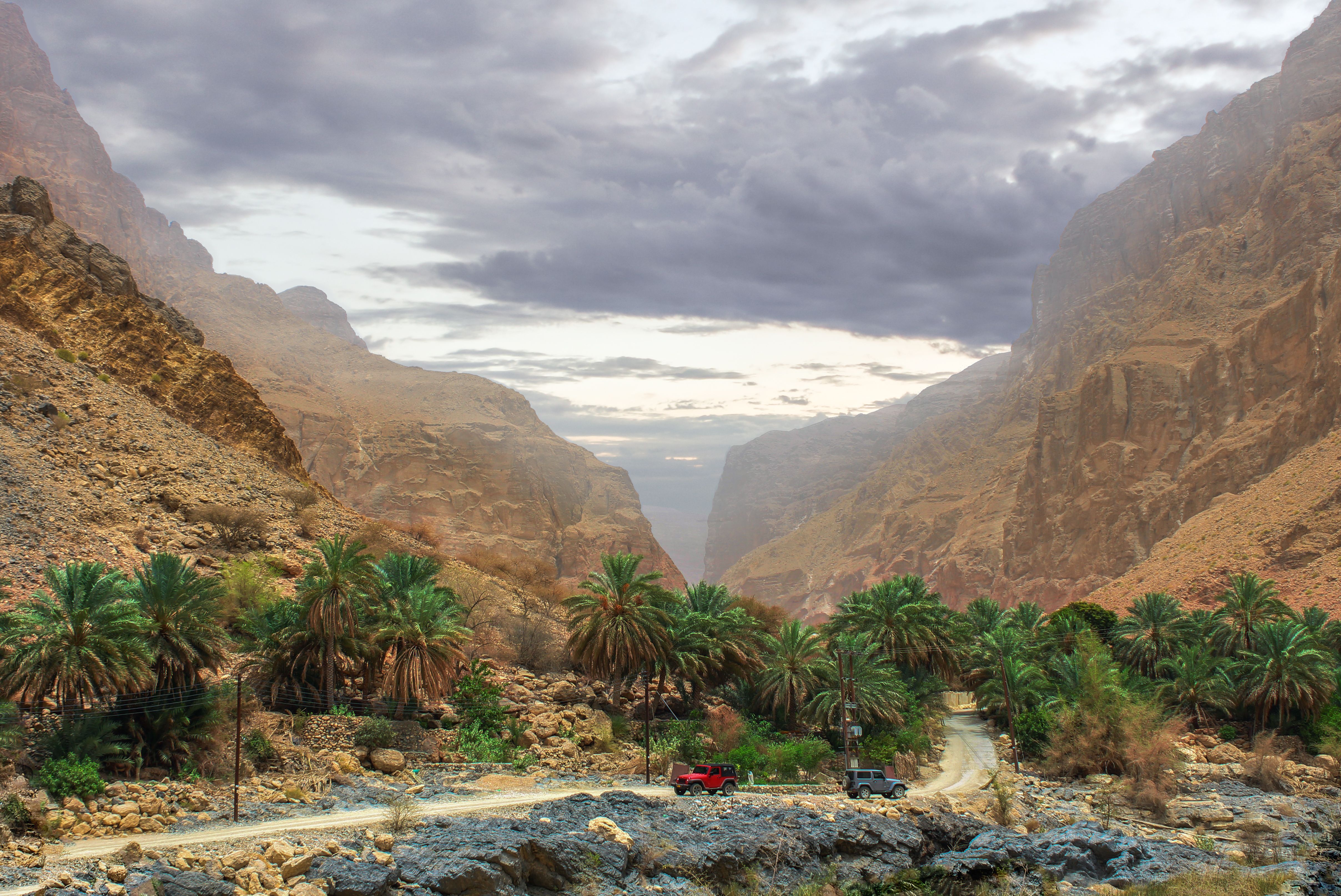
Drive toward Nizwa and you are surrounded by mountains and small towns.
Go into Jebel Akhdar and you are walking between villages and terraces.
Head toward Sharqiya Sands and eventually there is nothing around you but dunes.
That quiet is one of Oman's defining qualities.
Do I feel comfortable at night?
Generally, yes.
I am comfortable being out in Muscat in the evening.
Restaurants and cafés are active late.
Families are out.
People are shopping.
It does not feel like the city shuts down when it gets dark.
As anywhere, I still use judgment about where I am and how late it is.
But I do not feel that nighttime automatically means I need to be inside.
That is especially relevant for visitors because some of the nicest moments in Oman happen after the heat of the day disappears.
Muttrah feels different at night.
Muscat feels softer.
The desert becomes quiet.
Even the mountains can feel completely different after sunset.
What about crime?
Personally, crime is not something I find myself thinking about constantly here.
That alone says a lot.
I am still aware of my belongings.
I still lock doors.
I still use ordinary common sense.
But I do not walk around expecting someone to steal from me or cause a problem.
The bigger risks I think about when traveling around Oman are much more practical:
- driving tired
- heat
- flash floods
- swimming beyond your ability
- hiking somewhere remote without preparation
- driving into the desert without knowing what you are doing
Those are the situations where travelers should be more careful.
The natural environment deserves more attention than fear of people
This is something I wish more visitors understood.
Oman feels safe socially, but nature here should still be respected.
Wadis can flood.
The heat can become serious.
Mountain roads can be steep.
The desert can be unforgiving if you drive into it unprepared.
If you are visiting Wadi Shab & Bimmah Sinkhole, your biggest concern should probably not be crime.
It should be having good shoes, enough water, being comfortable swimming and paying attention to weather conditions.
If you are heading into Sharqiya Sands, the important question is whether your vehicle and driver are suitable for the desert.
Those are the kinds of precautions that actually improve your trip.
Does Oman feel welcoming to foreigners?
Yes.
That has been one of my strongest impressions.
Oman has a real culture of hospitality.
People offer help.
They offer coffee.
They offer food.
They ask where you are from.
Sometimes people are simply curious.
Of course, not every interaction with every person will be perfect. That would be unrealistic anywhere.
But the overall experience of being a foreigner here has been very welcoming.
You are not made to feel like your presence is unusual.
What about tourists traveling now?
Tourism is continuing.
People are still arriving.
Hotels are open.
Tour companies are operating.
Visitors are still going to Nizwa, Jebel Akhdar, Jebel Shams, Wadi Shab, Sharqiya Sands and the Daymaniyat Islands.
If you were here without constantly checking international news, daily life would not give you the impression that Oman had suddenly stopped functioning as a travel destination.
That is important context.
Should you cancel your trip because of the headlines?
I would not make that decision based on headlines alone.
Read current government guidance.
Check your airline.
Make sure your travel insurance is appropriate.
Understand what is actually happening and where.
Then make the decision you are personally comfortable with.
Some travelers are naturally more cautious than others.
There is nothing wrong with that.
But if someone asked me personally, “Do you feel unsafe living in Oman right now?”
My answer would be no.
Where would I still be cautious?
I would still use more caution around:
- the Yemen border
- isolated areas you are unfamiliar with
- remote hiking routes
- flash-flood conditions
- desert driving
- long drives when tired
- any situation where official authorities issue a specific warning
The Yemen border in particular is specifically identified in current U.S. guidance as an area not to travel to.
That area is also completely unrelated to the itinerary of almost every normal visitor coming to Muscat and northern Oman.
If you are a woman considering Oman alone
I would not want fear to be the reason you decide against coming.
Prepare properly.
Book somewhere you feel comfortable staying.
Arrange your first airport transfer if that makes you feel more relaxed.
Dress respectfully.
Keep someone informed when you head into remote areas.
Use a guide when an activity or route is outside your comfort level.
Then enjoy yourself.
You may be surprised by how quickly you stop thinking about being a solo woman and simply start thinking about your trip.
Some of the places where I feel most at ease
There is something very calming about sitting by the sea in Muscat.
Or driving through the mountains.
Or sitting in the desert after sunset when everything becomes quiet.
Even something as simple as walking through a grocery store or sitting in a coffee shop feels ordinary.
That ordinariness is actually what I find reassuring.
Safety is not always a dramatic feeling.
Sometimes safety is simply being able to go about your day without constantly thinking about it.
That is what Oman feels like to me.
A note about travel advisories
Because this topic can change, I would always encourage travelers to check their own government's advice before departure.
As of August 30, 2026, the U.S. State Department's advisory for Oman remains at Level 3 due to regional armed-conflict and terrorism risks.
That should be taken seriously.
It should also be understood in context.
An advisory is designed to communicate potential risk.
My experience describes what daily life currently feels like inside Oman.
Both can be true at the same time.
My perspective
I do not want to tell travelers that nothing could ever happen.
Nobody can promise that anywhere.
I also do not think it is fair to describe Oman only through the tensions surrounding the wider region.
I live here.
I am a woman living independently here.
I go about my life comfortably.
The streets are calm.
Businesses are operating.
Families are living their lives.
Tourists are traveling.
Oman still feels like Oman.
So yes, stay informed.
Take sensible precautions.
Watch the regional situation.
Check your flights before traveling.
But if your question is simply, “Does Oman feel frightening or unstable on the ground?”
That has not been my experience at all.
For me, it continues to feel peaceful, welcoming and remarkably easy to call home.